
From Old to New – Why I Rework My Older Paintings

Why I Started Reworking My Older Paintings
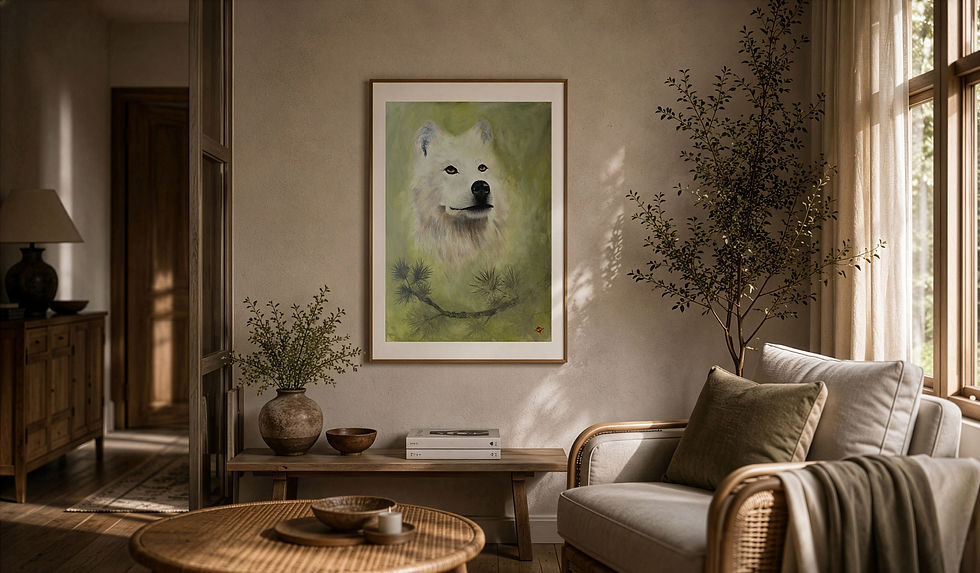
Over the last few months, my art has changed a lot. My color palettes have become calmer, the backgrounds softer, and the overall atmosphere of my paintings more gentle and minimalistic. Still, I never felt the need to simply leave my older works behind.
Quite the opposite.
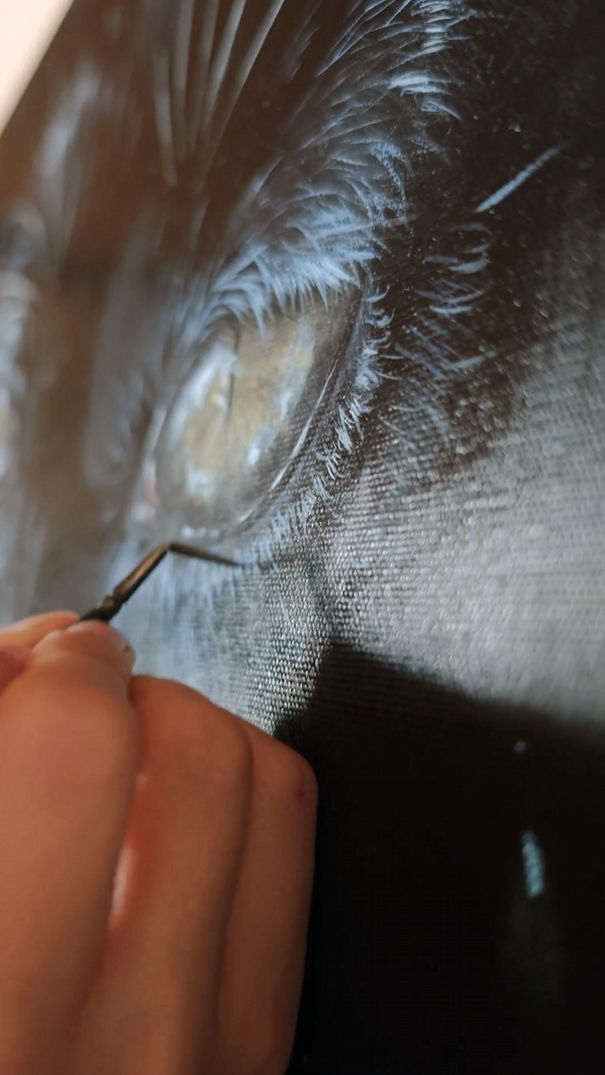
Many of my older paintings mean an incredible amount to me. Every single piece contains time, patience, growth, and often a very specific phase of my life. Some works remind me of certain thoughts, emotions, or periods in which I saw myself very differently as an artist.
That is why I never wanted a complete “new beginning” where everything old disappears.
I wanted to take my previous works with me. Not erase them — but evolve them further. And that is exactly how the idea emerged to carefully rework older paintings and integrate them into my new artistic direction.
I Used to Love Strong Contrasts and Dark Backgrounds
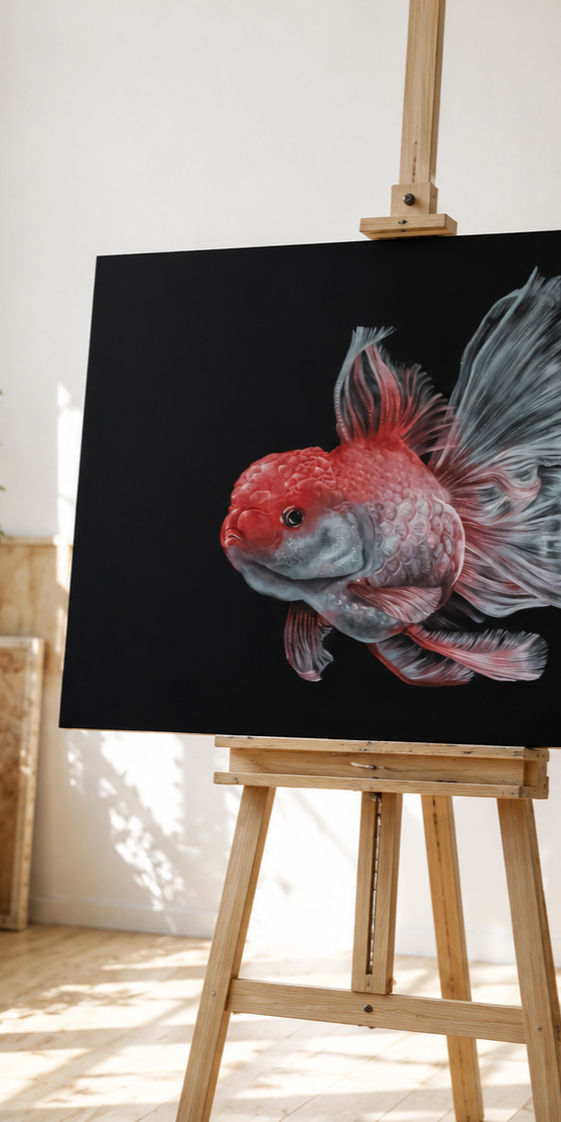
When I look at my older works, one thing immediately stands out to me: how fascinated I was by strong contrasts at the time. Many of the backgrounds were almost black or painted in very dark tones. This gave the animal portraits a more intense, dramatic, and often mysterious feeling. I loved this strong focus on the subject and the clear separation between the animal and the background.
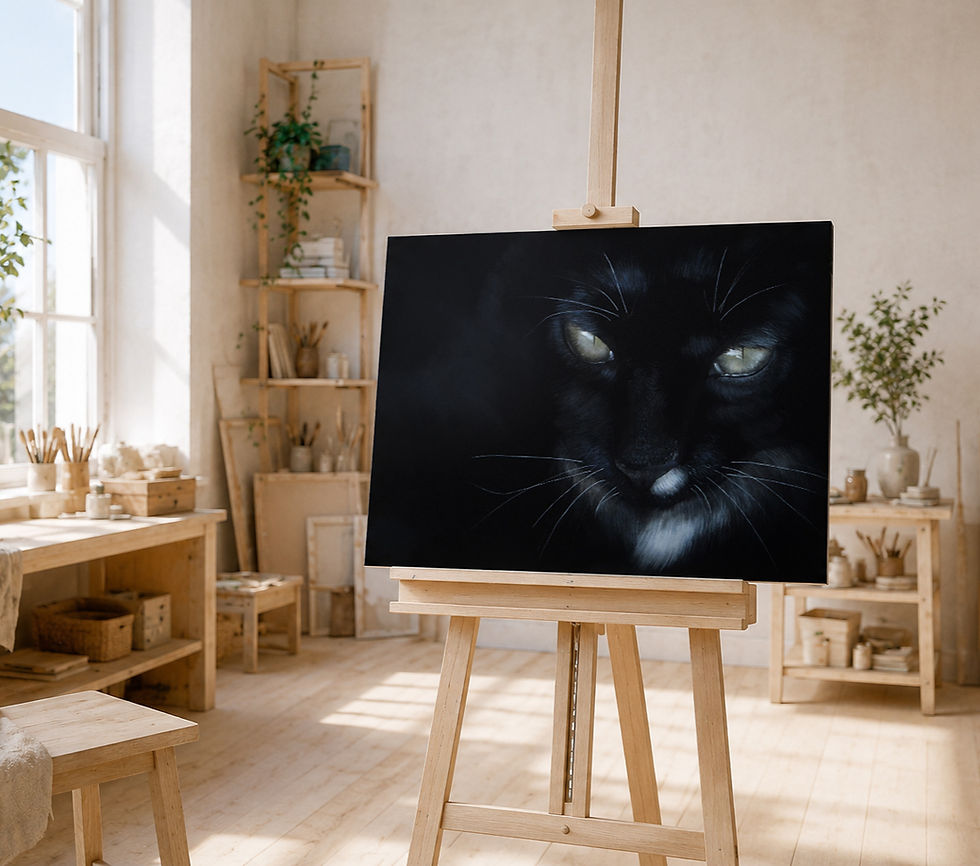
The colors themselves were often much bolder and more contrasting as well. Back then, I truly enjoyed creating as much depth and expression as possible. And honestly, I still love these paintings today. They are part of me and part of my artistic journey. They reflect exactly the artist I was at that moment in time. That is why I do not want to “replace” these works or speak badly about them. But over time, I noticed that my perception slowly began to change. I found myself becoming more and more drawn to calm color palettes, softer transitions, and more open compositions. Not because the older paintings were wrong — but because I evolved.
Why I Paint More Calmly Today
Today, I look for something very different in painting than I did in the past. Back then, I often wanted to impress people. Today, I want to create atmosphere. I began to focus much more on calmness, simplicity, and natural aesthetics. Especially my journey to Japan changed something deeply within me. I could feel this softness and restraint everywhere — in the architecture, the interior design, the colors, the fabrics, and even in the small details of everyday life.
Nothing felt loud or overloaded.

And that exact feeling inspired me tremendously. I wanted to start creating paintings that do not immediately scream, “Look at me!” Instead, I wanted to create artworks that are simply allowed to exist quietly within a space. Because of this, my backgrounds have become brighter and softer. The contrasts more subtle. The color palette more natural. Especially my new Kasumi series reflects this transformation very clearly.
Throwing Away Old Paintings? I Could Never Do That
The idea of simply discarding or forgetting my older works never felt right to me. Every painting carries memories within it — and also a small piece of my soul. I often still remember exactly when I painted it, what music was playing, or what I was thinking about at the time.
Some paintings stayed with me for months, while others were spontaneous moments full of energy. That is why many of my older works are emotionally very close to me. Of course, today I notice things I would do differently. But honestly, I think that is something beautiful. It shows growth.
I believe many artists are extremely hard on their older works. I used to be like that too. Today, I try to look at them more kindly. Because without those paintings, my current art would not exist.
How I Decide Which Paintings to Rework — and How Much
At this point, I have actually decided to rework all of my older paintings. Some pieces only need very small adjustments, while others need a little more calmness, softer transitions, or a different color atmosphere. Very often, I look at an older work and realize that the exact mood I am searching for today was already there all along.

Oktopus auf Leinwand 
Sandkatze auf Leinwand 
Robbe auf Leinwand
It may simply have been expressed in a louder, more contrasting, or darker way back then.
It does not feel as if I am “correcting” my old paintings. It feels more like I am giving them the calmness that I myself have found today.
Of course, there is no fixed rule for how much a painting changes. Some works remain very close to their original character, while others evolve much more noticeably. But every single piece is allowed to remain part of my new artistic direction.
The Process of Reworking
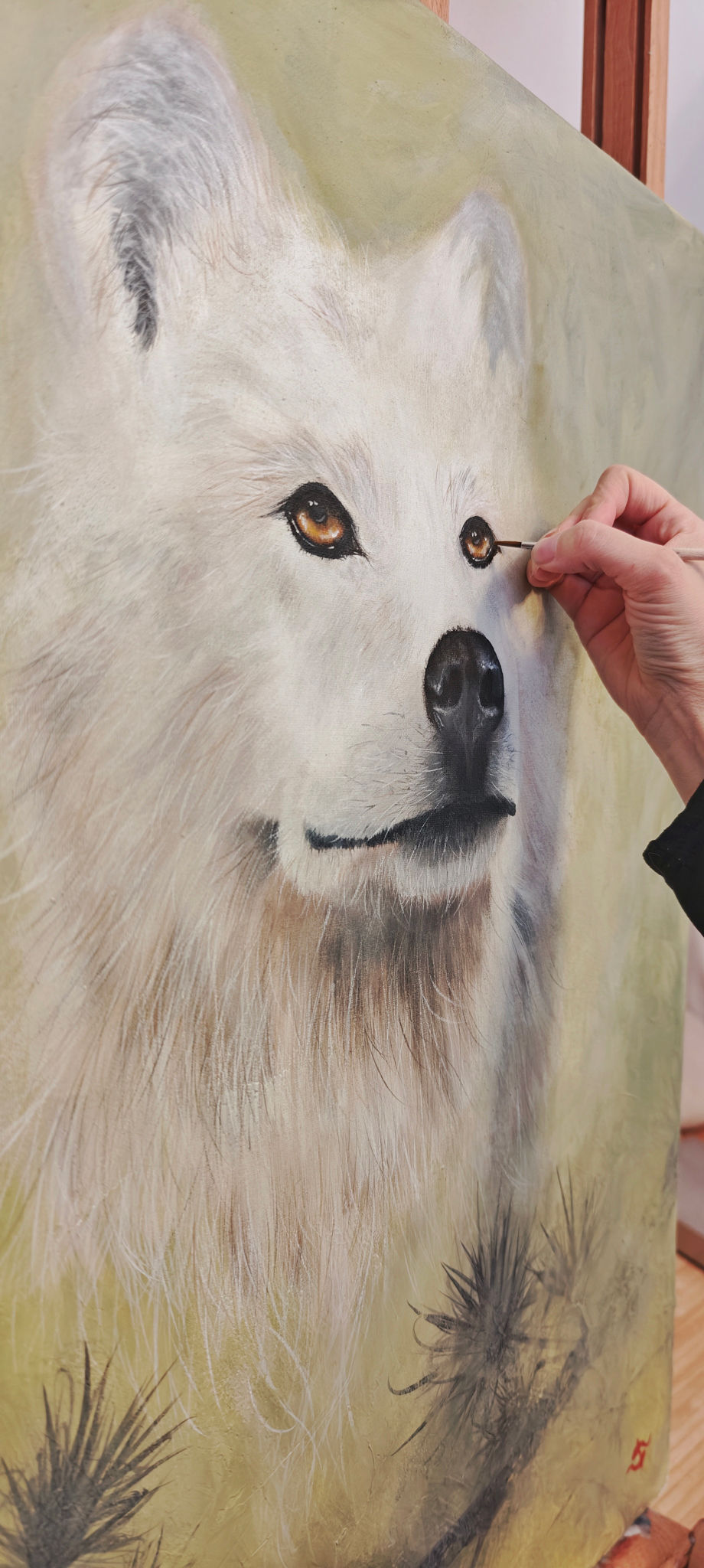
The process of reworking itself is incredibly exciting.
Sometimes I begin by brightening the background or making darker areas appear softer. In other cases, I reduce certain colors or add new gentle transitions. What has become especially important to me today is atmosphere.
I want the paintings to have space to breathe. I want them to feel calmer and no longer appear as if they are fighting against their own background.
Occasionally, I also add small accents using gold, silver, or other metallic pigments. I use these very sparingly so they bring a subtle sense of life to the painting without taking away its calmness.
And sometimes, reworking also means being brave. There are definitely moments when I repaint large areas completely or make decisions I would never have dared to make in the past.
Why Reworking a Painting Is Harder Than Starting a New One
Starting a completely new painting is often much easier than changing an existing one.
With a fresh canvas, there is no past. No “before.” No emotional attachment to certain areas. You can experiment freely, make mistakes, or change directions without feeling like you are touching something that already exists.
Reworking a painting feels completely different.
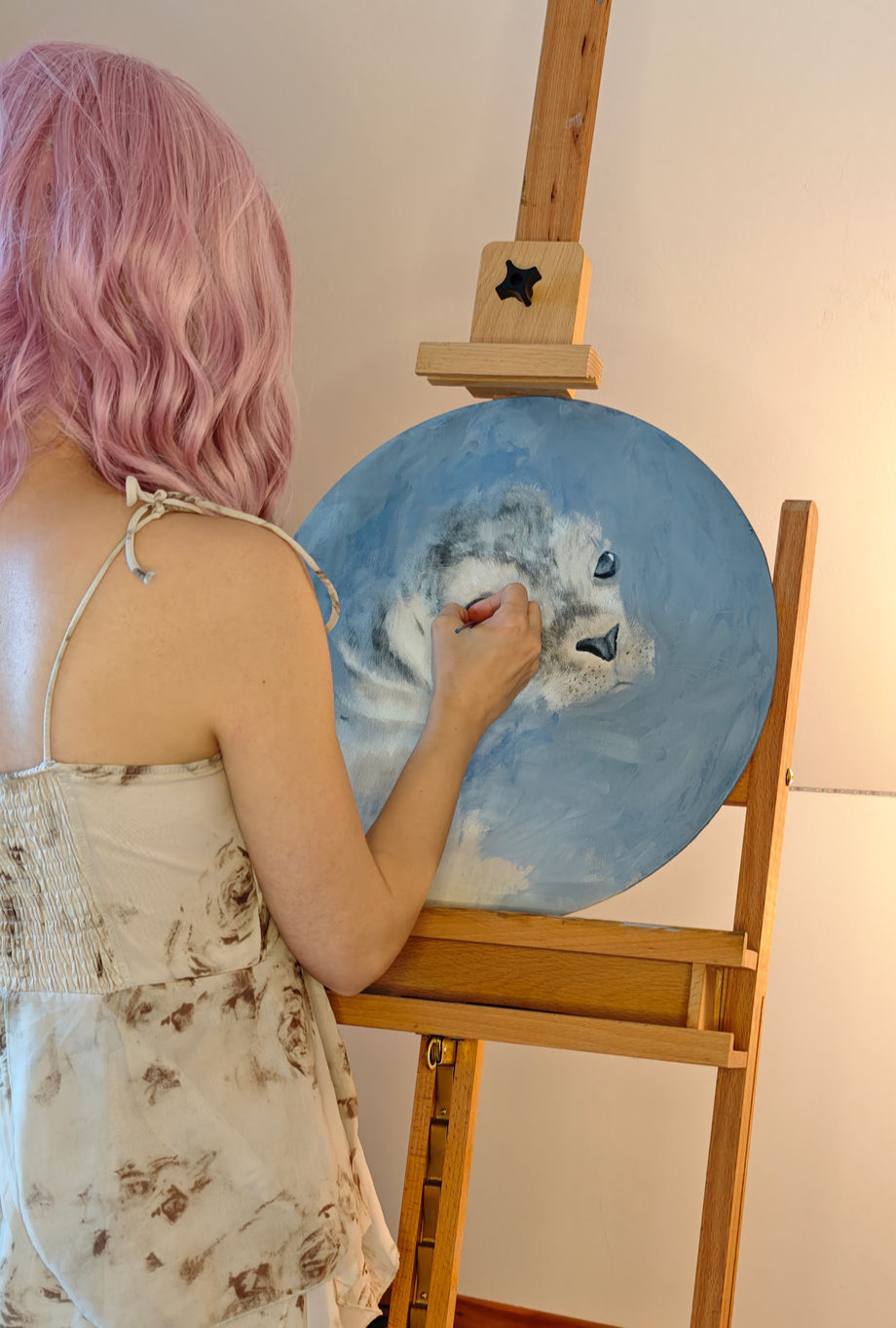
You sit in front of a piece that already carries a story. Often, I still remember how long certain areas took or how happy I was with specific details back then. That is exactly why it can sometimes feel difficult to interfere with it again.
There are moments when I sit in front of a canvas for several minutes, simply thinking about whether I should really make that one brushstroke. Because once the paint touches the painting, there is usually no true way back.
What makes it especially difficult is that, in a way, you are often working against your own past. Decisions that once felt completely right may no longer fit the atmosphere I am searching for today. And yet, memories are still attached to them.
Sometimes, while reworking, I also notice how differently I paint today. In the past, I worked much more spontaneously and often tried to create the strongest possible impact. Today, I take far more time for soft transitions, calm color fields, and subtle nuances. Because of that, the process can sometimes feel almost strange — as if two different artists were working on the same canvas.
And that is exactly what makes this process so fascinating at the same time.
Because when reworking a painting, I am not simply creating a “new image.” Instead, two different creative phases begin to merge together. The earlier version of myself remains visible — but it receives a new direction, a new atmosphere, and sometimes even a new sense of calmness.
I believe that is why some reworked paintings actually feel more complete to me than before. Not more perfect — but closer to what I truly want to express today.
At the same time, reworking forces me to work more consciously. With new paintings, many things can develop intuitively. Older works, however, constantly require decisions to be weighed carefully: What should remain? What should change? What would benefit the painting — and what would take away its original soul?
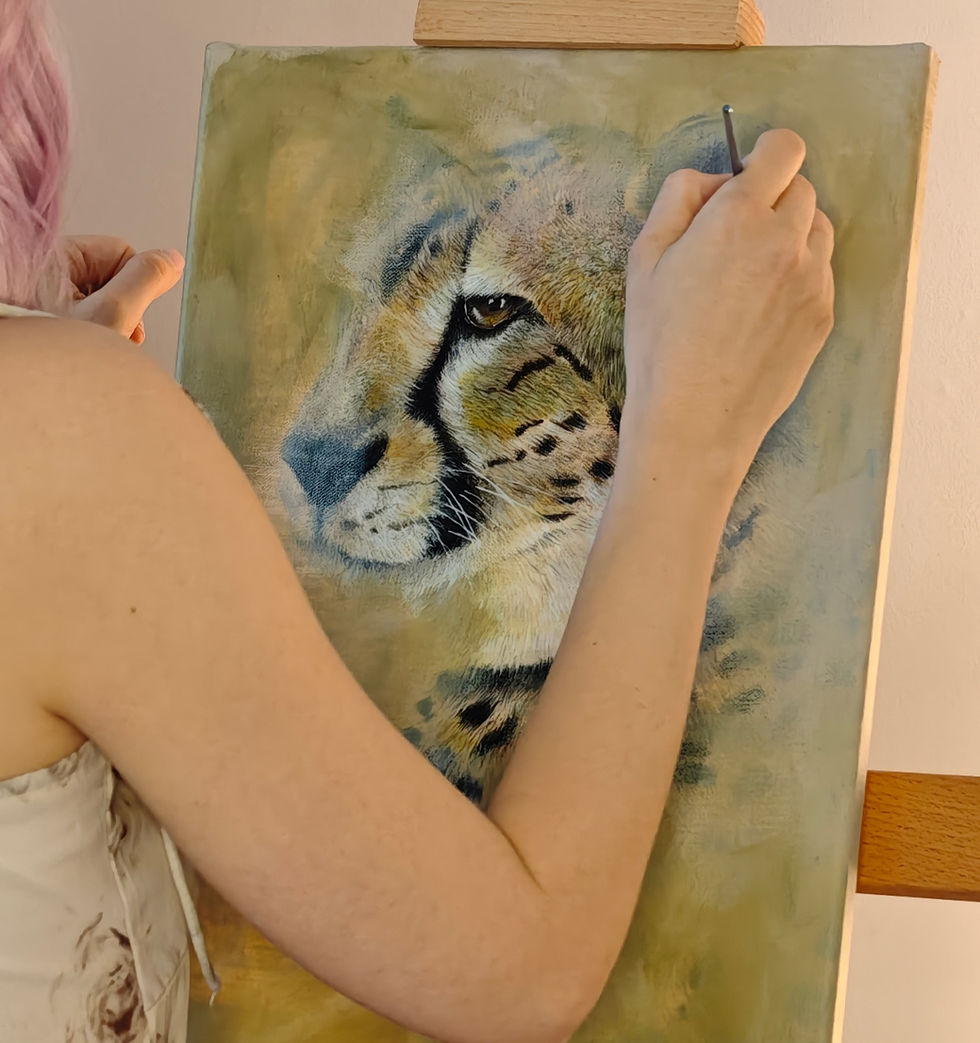
That balance is often incredibly difficult. Because my goal is never to completely “remake” an old painting. I do not want to erase its history. I want to continue it. And sometimes, that is exactly when the most interesting works emerge. Paintings that carry both the earlier intensity and the calmness I have found today. I think that is exactly why I have grown to love and appreciate this process so much. It reminds me that growth does not mean throwing away something old.
Sometimes, growth simply means looking at something familiar with new eyes.
What I Learned From My Older Works
Today, my older works show me one thing above all else: every phase had its purpose. In the past, I often looked at my older paintings very critically. I mostly focused on the things I would do differently today. But over time, my perspective has changed completely. I no longer believe that artists should feel ashamed of their earlier styles. Growth does not mean that the old work was bad. It simply means that you kept moving forward.
Quite the opposite.
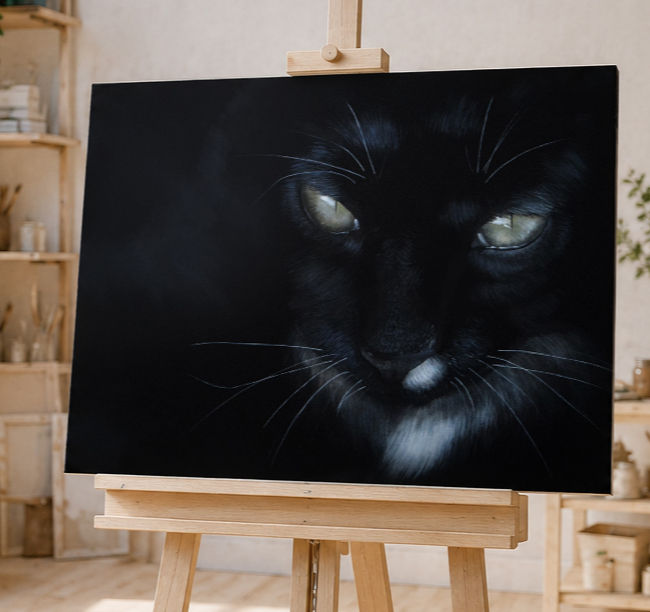
Technically, I learned an incredible amount through these paintings. Many of my very early works were not yet so focused on precision and detail. Only later did I begin to study fur structures, light, contrasts, and realistic effects more intensively. Because of that, I developed a much deeper understanding of depth, materiality, and different surfaces.
And that knowledge still accompanies me in my newer series today — even though my paintings have become much calmer overall. In fact, within my Kasumi series, there is usually always one area that is rendered with extreme detail in contrast to the rest of the painting.
In the past, the focus was often on strong contrasts or creating an overall intense visual impact. Today, I work much more with subtle nuances and delicate surface textures. Especially while reworking older paintings, I notice how much my perception has changed. Back then, many works already felt completely finished to me. Today, I suddenly see areas where I want to introduce more depth or a greater sense of naturalness. Textures in particular have changed a lot over time.
In the past, I often kept backgrounds relatively smooth or uniform. Today, I work far more consciously with soft textures, layered surfaces, and small irregular details that give the painting more atmosphere. Sometimes, while reworking, I even add completely new structures that did not exist before. Not because the older paintings were “wrong” — but because I simply see differently today.
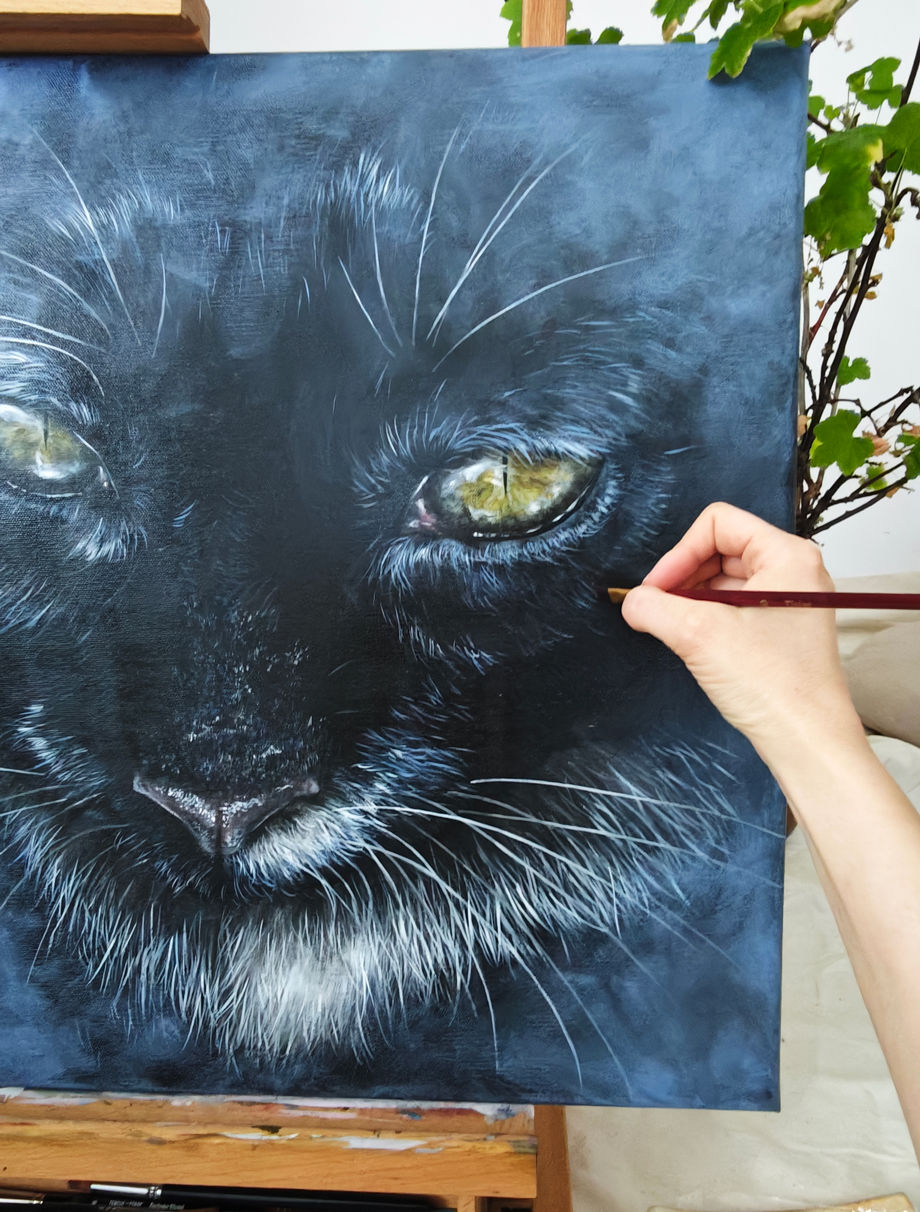
And I think that is exactly what makes creative growth so beautiful: you do not only change your technique, but also the way you look at your own work. My older paintings also taught me how important emotions are in art. In the past, I often wanted to create artworks that felt as impressive as possible. Today, I care much more about how a painting feels. Still, my older works continue to carry so much energy, passion, and love for detail — and that is exactly why they still mean so much to me.
I see these older paintings as necessary steps. Every single phase left something behind: technical knowledge, new experiences, the courage to experiment, or a better understanding of what I truly want to express. And perhaps that is the most beautiful part of growth: you do not lose the older versions of yourself. They simply continue to grow with you.
Art Is Allowed to Change
I believe art is allowed to change just as much as people do. You do not have to use the same colors forever or stay with the same style for the rest of your life. Interests change. Perception changes. Feelings change. Things that once deeply inspired you may no longer feel quite as right years later. And that is exactly what happens within creative processes as well.
I think many artists unconsciously put pressure on themselves to always remain “the same” — especially when a certain style worked well or became recognizable. But to me, creativity is never something rigid. It is constantly moving forward. Sometimes slowly. Sometimes suddenly.
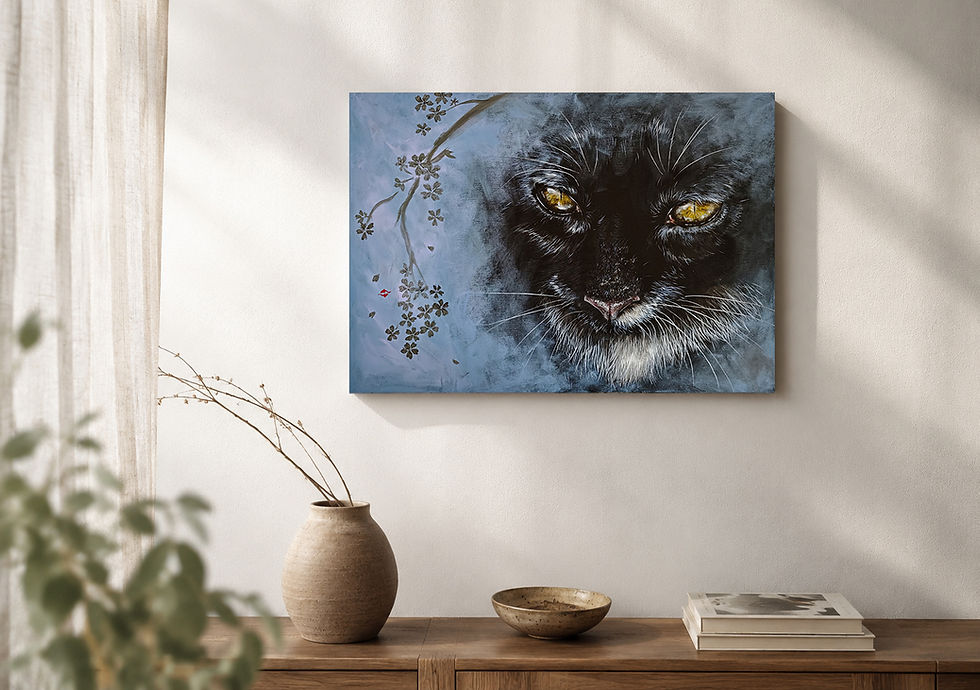
When I look at my newer works today, I see calmness, soft colors, and a very specific atmosphere. In the past, my paintings were often more intense, more contrasting, and darker in their overall feeling.
But both belong to me.
And I think that realization was very important for me personally: I first had to understand that moving into a new direction does not mean rejecting the old one. Very often, you only discover new paths because you walked different ones before. In fact, I believe every creative phase leaves something valuable behind. Some phases bring technical growth. Others build confidence or create a better understanding of color, composition, or atmosphere. And sometimes, you only realize years later why a certain phase was important in the first place.
For me, it was very similar. The more intense paintings helped me understand expression and depth. The highly detailed works improved my technical skills. The darker pieces taught me how powerful light and contrasts can be. And eventually, from all of that, the desire for calmness emerged naturally. You begin to discover new influences that once played no role at all.
And art should be allowed to reflect that.
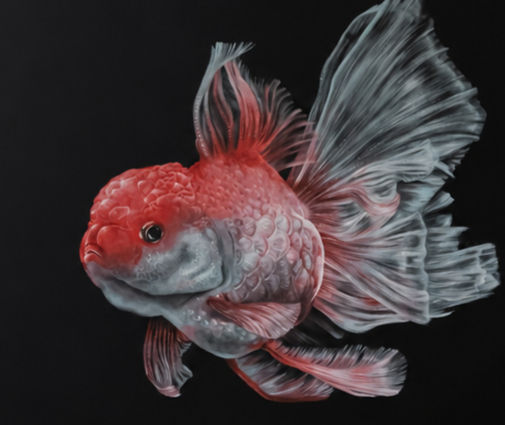
I actually think it is beautiful when growth becomes visible. When older works do not look exactly the same as newer ones. Because that is where personality lives.
To me, art does not need to be perfectly consistent. It is allowed to grow. It is allowed to change. It is allowed to move into new directions while still keeping its own soul.
And perhaps that is the most honest thing about creative work: It never truly stands still.
Conclusion – Turning the Old Into Something New
Reworking my older paintings does not feel like starting over to me. It feels more like continuing something. I never had the desire to completely leave my earlier works behind or pretend that they no longer belong to me. Many of these paintings have accompanied me for years. They carry memories, experiences, and a large part of my own artistic growth within them.

That is why reworking them is not about “fixing” something. It is much more about meeting these paintings again in a new way. Some works gain a calmer atmosphere through the process, others more depth or a softer mood. Often, the changes are not dramatic at all — sometimes small adjustments can completely transform the feeling of a piece.
Sometimes, a painting does not need to be reinvented entirely. Maybe it only needs a little more light. A more open space. Or a color that fits my perception better today. I love the idea that older and newer works slowly begin to merge together because of this. That my earlier and current artistic language no longer work against each other, but are allowed to grow together.
And honestly, I am incredibly excited myself to see what kinds of works will emerge in the future. This process of reworking constantly reminds me how much art can evolve — often without any harsh break at all. Ideas change. Techniques change. And sometimes, you suddenly discover things in older paintings that you could not even see yourself back then. Perhaps my art will change again in a few years. Maybe I will discover new colors, new textures, or entirely different atmospheres that inspire me.
And that is exactly what makes creative work so exciting to me:
It never truly stands still.


Comments